A Process in Plain View.
Belaro's methodology is not a marketing claim. It is a documented process. This page describes, in specific terms, how every piece of content published in the journal is sourced, reviewed, contextualised, and — when necessary — corrected.
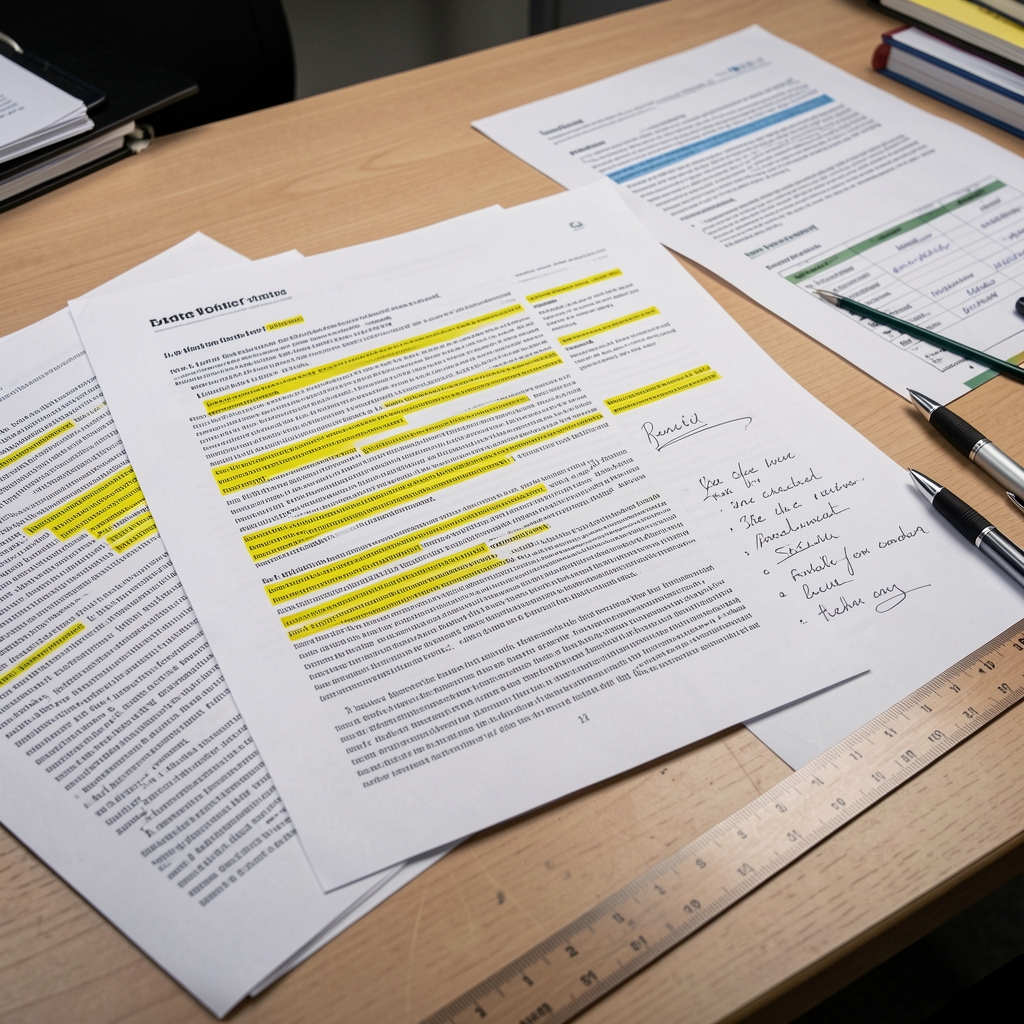
Six Stages. Every Article.
Topic Identification and Relevance Assessment
A topic enters the pipeline when a contributor identifies a gap or development in the published research that is both consequential to men's daily practice and insufficiently covered in accessible format. Topics are logged with an initial source reference before any writing begins.
The relevance test asks three questions: Is this applicable to the daily life of a man between 25 and 50 in an urban Indonesian context? Does the evidence base support a useful practical claim? Is the coverage balanced — neither inflating a weak finding nor dismissing a genuine one?
Source Compilation and Quality Assessment
The contributor compiles a source file: the primary research papers, review articles, and documented practitioner accounts that will underpin the article. Each source is assessed on four criteria: publication context, research design quality, recency (prioritising sources published within ten years unless foundational), and independence from commercial funding.
Sources with declared commercial conflicts are noted in the internal file and are not used as primary citations. Where only commercially-funded research exists on a topic, that limitation is disclosed in the published piece.
Draft Composition
The assigned contributor writes the initial draft with source annotations embedded. Every substantive claim — defined as a claim that a reader might act on — is marked with an inline reference at draft stage. Stylistic choices and framing preferences are left to the contributor; factual accuracy is the common standard.
Draft composition is not time-pressured. Belaro does not operate on a news cycle. A contributor may return to a draft multiple times over weeks before submitting it for review. This is by design.
Independent Editorial Review
The draft is reviewed by an editorial team member who was not involved in composing it. The reviewer checks: claim-source alignment, logical consistency of the argument, language precision (particularly around terms that carry specific meaning in nutritional science), and absence of commercial framing.
The reviewer does not assess writing style. Style is the contributor's domain. The review is a factual and logical audit. Where the reviewer cannot verify a claim against the provided source, the claim is either reformulated or removed.
Contextualisation for Indonesian Readers
Before publication, each piece is assessed for local relevance. Research conducted in European or North American populations is not assumed to transfer directly to Indonesian men. Where localisation is possible — adapting food examples, adjusting for climate-specific hydration, referencing locally available movement options — it is applied at this stage.
Where localisation is not possible, this is stated. A piece covering Nordic walking research, for example, will note that the terrain applicability differs from Jakarta's urban geography. The reader is never left to assume a direct transfer that has not been assessed.
Publication and Post-Publication Monitoring
Published articles are revisited when new research materially changes the evidence base they rely on. When a correction is warranted, it is made in-place and the correction is noted at the head of the article with a date and a brief summary of what changed and why.
Corrections are never silent. The journal's position is that a visible correction record is evidence of rigour, not weakness. Readers who identify potential errors are encouraged to contact the editorial team directly.
What Counts as a Valid Source.
- Peer-reviewed journal articles from indexed nutritional science, exercise physiology, and public health publications
- Systematic reviews and meta-analyses published in the last ten years
- Documented practitioner accounts from qualified nutrition and exercise professionals
- National dietary guidelines and position statements from established nutrition bodies
- Foundational research older than ten years where it represents the established baseline understanding of a topic
- Brand-funded white papers or research conducted without disclosed independence
- Social media content, influencer protocols, or gym-floor observations without a documented evidence basis
- Single case studies used to support general population claims
- Pre-print research that has not undergone peer review
- Popular science summaries where the original research cannot be verified
How We Discuss Supplements.
Where Belaro covers nutritional supplementation, the approach follows a narrow set of standards designed to prevent the commercial contamination that undermines much supplement-adjacent content.
Active ingredients discussed in Belaro's supplementation content are assessed based on published nutritional research. Category-level discussion covers the established evidence for or against a nutrient's role in specific physiological functions — energy metabolism, immune support, normal cognitive function — using the established vocabulary of nutritional science rather than marketing language.
No specific brand is promoted. Where a supplement category is discussed, the discussion is accompanied by a note that product quality varies and that sourcing from suppliers whose facilities maintain food-grade standards is advisable. Ingredient profiles selected for editorial discussion are accompanied by a note on the composition evidence basis and undergo independent cross-referencing for accuracy.
Ingredient profiles in Belaro's content are selected based on published nutritional research and undergo independent batch verification for quality and labelling accuracy. Active ingredients are sourced from documented suppliers, with each batch accompanied by a certificate of composition. Sourcing prioritises suppliers whose facilities maintain food-grade standards.
The Commercial Separation Policy.
Belaro accepts no advertising, paid placement, affiliate commissions, or sponsorship of any kind. No product category — food, supplementation, equipment, apparel — receives coverage because of a commercial arrangement.
This policy is structural, not conditional. There is no editorial tier at which commercial relationships would become acceptable. The journal is independently funded and its independence is not contingent on audience scale.
Where an editorial team member has a personal relationship with a business, brand, or practitioner who is being covered or discussed, that relationship is disclosed in the internal source file and the article is reviewed by a team member with no connection to that individual or organisation.
Common Questions.
Belaro is an independent wellness resource focused on everyday nutrition and active lifestyle practices for men. The content is not affiliated with any governmental or institutional body. We recommend speaking with a qualified wellness or nutrition professional before introducing any supplement to your daily routine, particularly if you have specific dietary requirements.